
CRISPR Off-target Analysis Services
Reviewer-ready end-to-end workflow with orthogonality
For customers seeking to advance CRISPR-based therapeutic programs through comprehensive off-target analysis, our end-to-end services encompass assays from off-target nomination to on-and-off target confirmation, with outputs specifically tailored for IND filings.
Rapidly move from the lab to life-changing advances.
Overview
CRISPR Off-target Analysis Services
Screening for off-target effects (OTE) is an important component of CRISPR therapeutic development. By identifying unintended edits, researchers can assess genome-wide editing activity and support informed candidate selection. This is particularly important in preclinical applications, where unintended genetic modifications can complicate candidate evaluation, optimization, and downstream therapeutic development.
By leveraging our enhanced OTE services, researchers and cell and gene therapy (CGT) developers can gain a deeper understanding of the off-target cleavage activities associated with diverse CRISPR-Cas systems. Request a consultation today.
Why choose Integrated DNA Technologies' off-target editing analysis services?
- Comprehensive end-to-end assessments:Utilize next-generation sequencing-based off-target analysis technology, UNCOVERseq™, alongside the award-winning rhAmpSeq™ CRISPR Analysis System for your pre-clinical therapeutic development.
- Robust performance, rigorous analytical and process standards:Experience highly reproducible assays with analytical sensitivities driven by empirical data for both nomination and confirmation assays.
- Expert regulatory support:Navigate complex FDA and EMA guidance for IND-enabling projects with our specialized regulatory support, tailored to meet the stringent requirements of your therapeutic development or novel publication.
- Comprehensive reporting:Receive in-depth reports on off-target nomination and confirmation, featuring site prioritization and recommended confirmation panels, providing you with actionable insights for your research or therapy development.
- Dedicated CRISPR team:Partner with our team of CRISPR experts who helped support the first personalized CRIPSR mRNA therapy. They are committed to your project's success from inception to completion, ensuring personalized support, reviewer-ready data, and expert guidance throughout the entire process.
Services
Characterizing on-target and off-target editing outcomes early in the discovery process is critical for cell and gene therapy development. Outsource your CRISPR off-target analysis to support candidate evaluation and IND-enabling studies based on the latest regulatory guidance.
End-to-end CRISPR on-and-off-target analysis from discovery to IND
Our comprehensive services include assays for both nomination and confirmation, utilizing orthogonal methods from discovery through preclinical stages and IND fillings.
| Available Services | Use Case | Service Modules | Typical Experiment Structures | Deliverables |
|---|---|---|---|---|
|
Off-target nomination |
|
|
|
|
|
Off-target nomination |
|
|
|
|
|
Off-target nomination |
|
|
|
|
|
Off-target confirmation |
|
rhAmpSeq Off-Target Confirmation Services including:
|
|
|
|
On-target confirmation |
|
|
|
|
Services aligned with guidance from FDA
Services for both nomination and confirmation assays are aligned with FDA guidance.
| FDA and other agencies | Nomination stage | Confirmation stage |
|---|---|---|
| Utilize multiple complementary assessment methods | Yes | |
| Detect off-target effects with high analytical sensitivity | Yes | Yes |
| Analyze human cell types from multiple donors | Yes | Yes |
| Detail the biological impact of off-target effects | Yes | Yes |
Our end-to-end process:
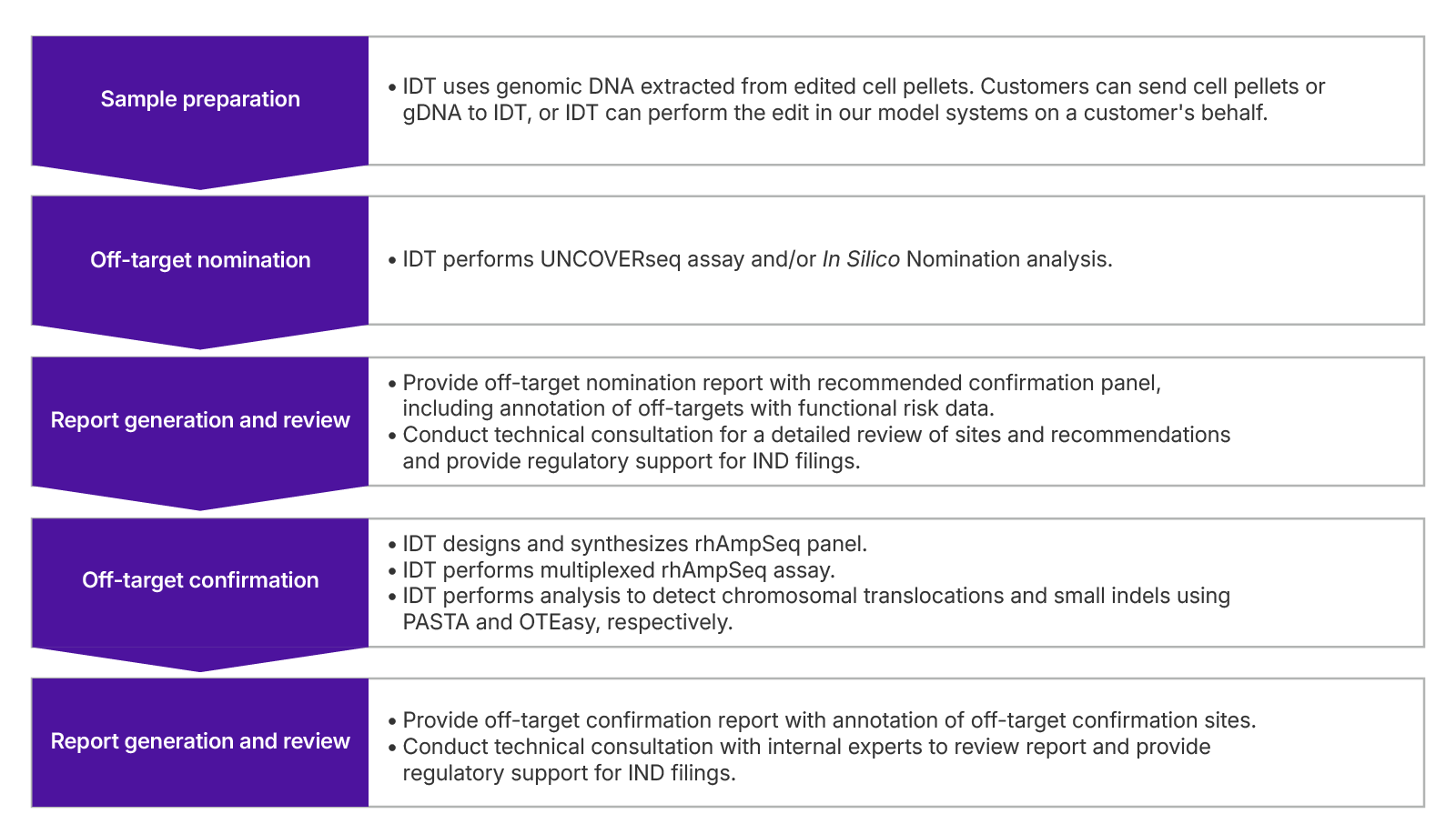
Leverage our services from nomination to confirmation, customized to your specific needs. For greater flexibility, you can either send us your samples or have IDT generate the samples using in-house nomination model systems.
Nomination assays
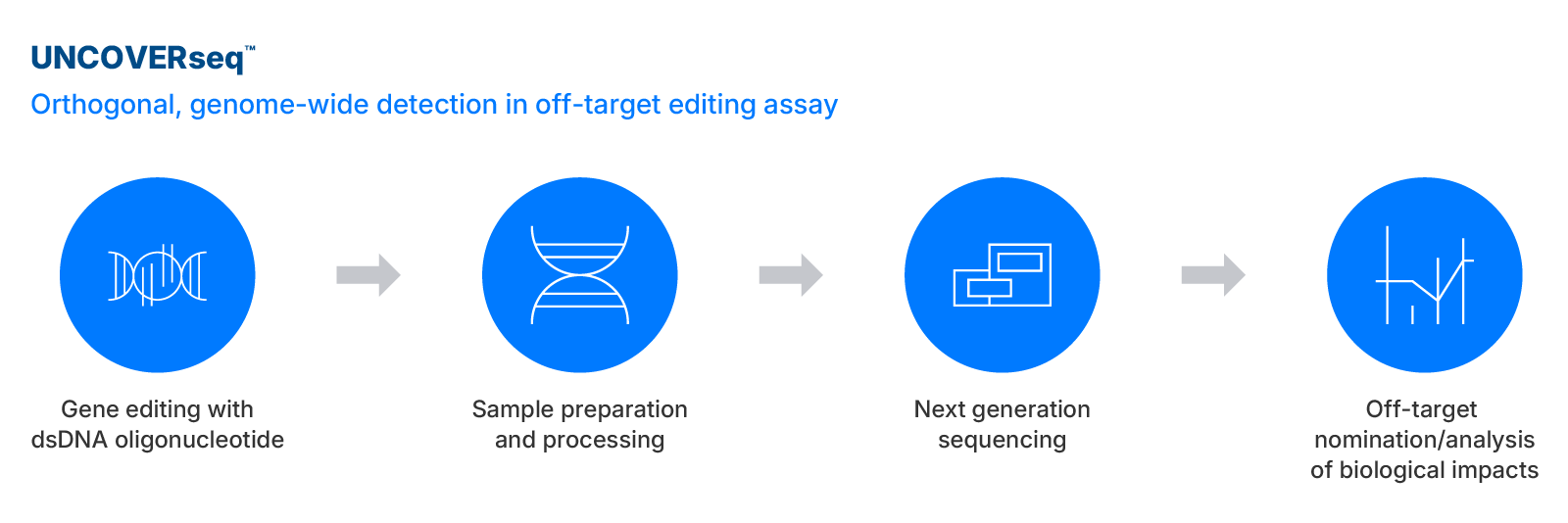
UNCOVERseq
IDT’s UNCOVERseq is a next-generation sequencing method based on the cell-based GUIDE-seq™ method for off-target nomination. UNCOVERseq stands for Unbiased Nomination of CRISPR Off-target Variants with Enhanced RhPCR.
In silico assessment
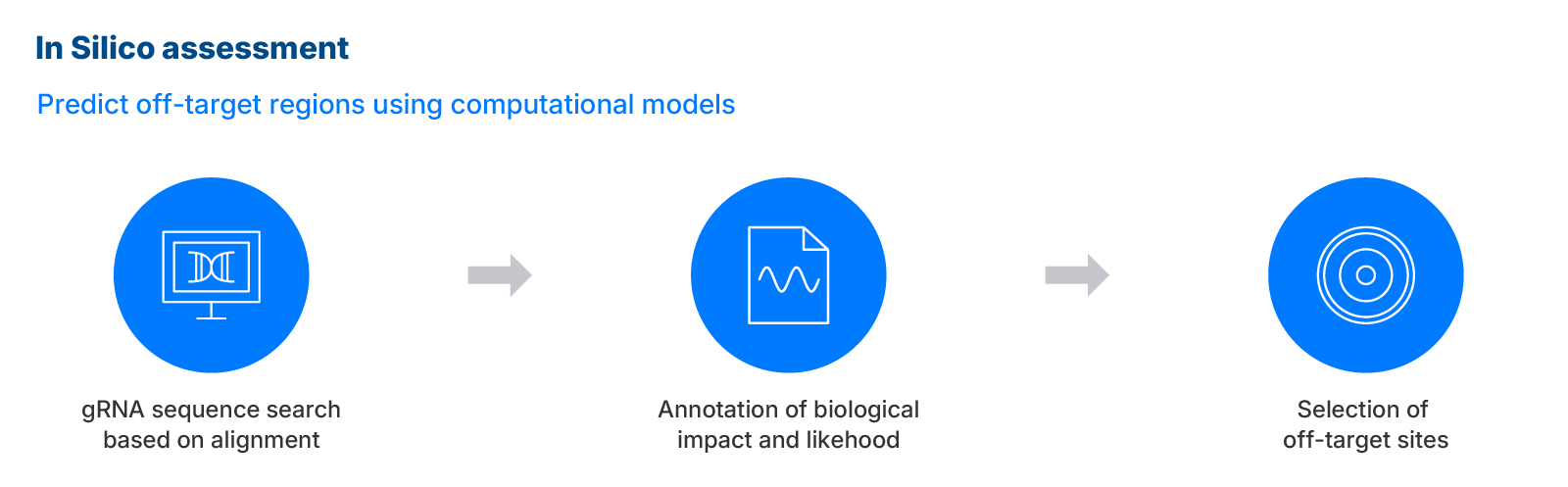
IDT's In silico assessment leverages computational methods to nominate potential off-target regions for CRISPR edits. This approach, combined with UNCOVERseq, ensures thorough annotation and prioritization of off-target sites, enhancing the accuracy and reliability of genotoxicity evaluations.
Confirmation assays
rhAmpSeq CRISPR analysis assay and tools
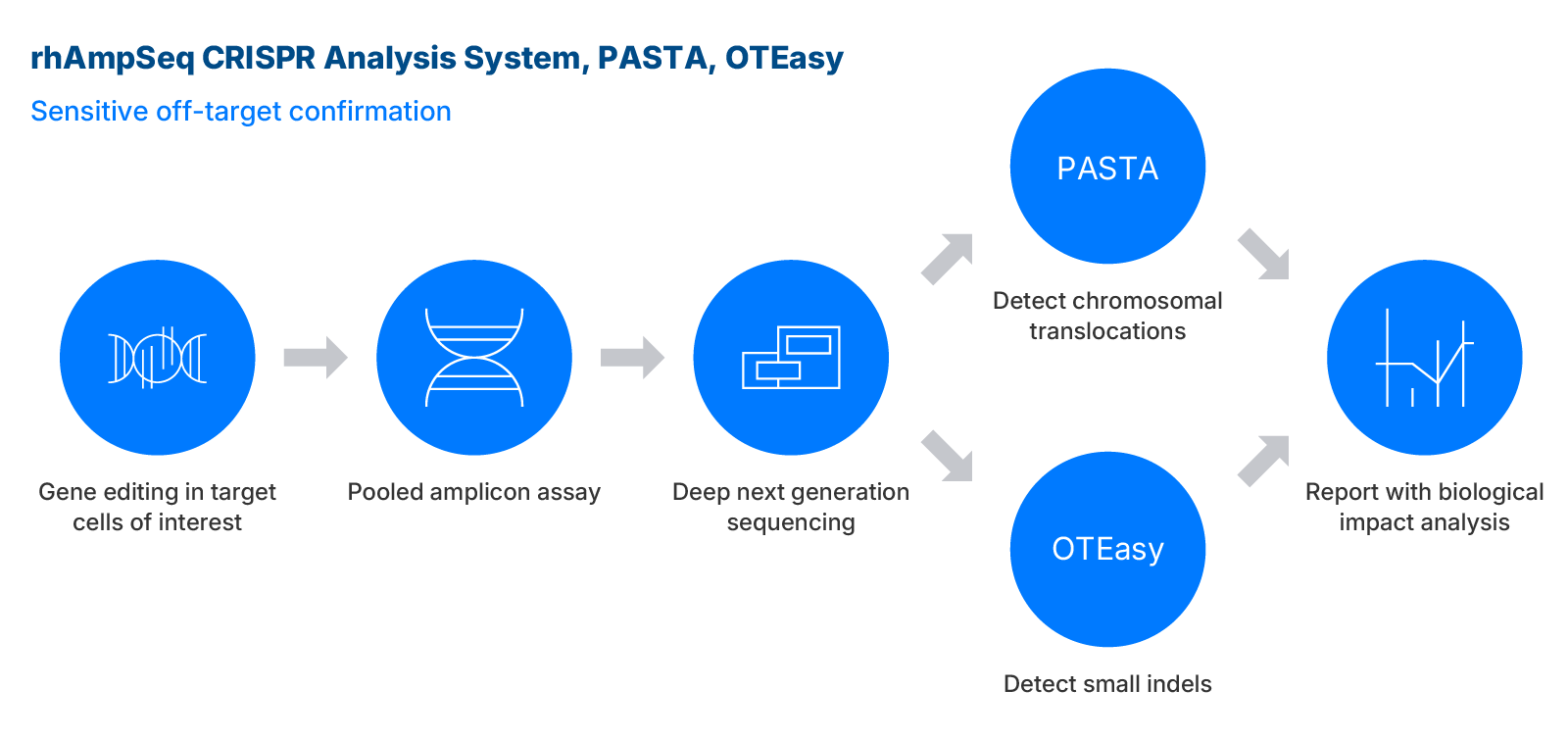
The award winning rhAmpSeq™ CRISPR Analysis System can be used to identify small indels, base editing, and chromosomal aberrations using high-throughput amplicon sequencing coupled with IDT's analysis workflows.
Product Data
Comparative analysis of UNCOVERseq to other nomination methods
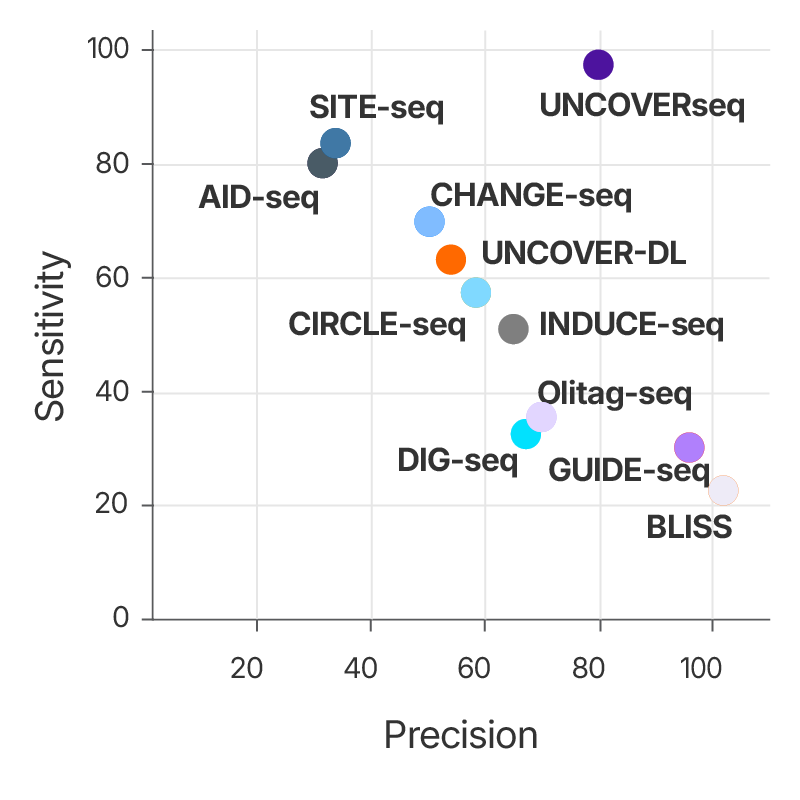
Figure 1. Comparison of the sensitivity of other published accounts of nomination technologies to nominate 100% reproducible UNCOVERseq off-target sites using EMX1 and FANCF. Method-specific sensitivity (nominated true positives / confirmed true positives) and specificity (confirmed true positives / confirmed method true + false positives) was calculated for each method across both gRNAs (n = 2).
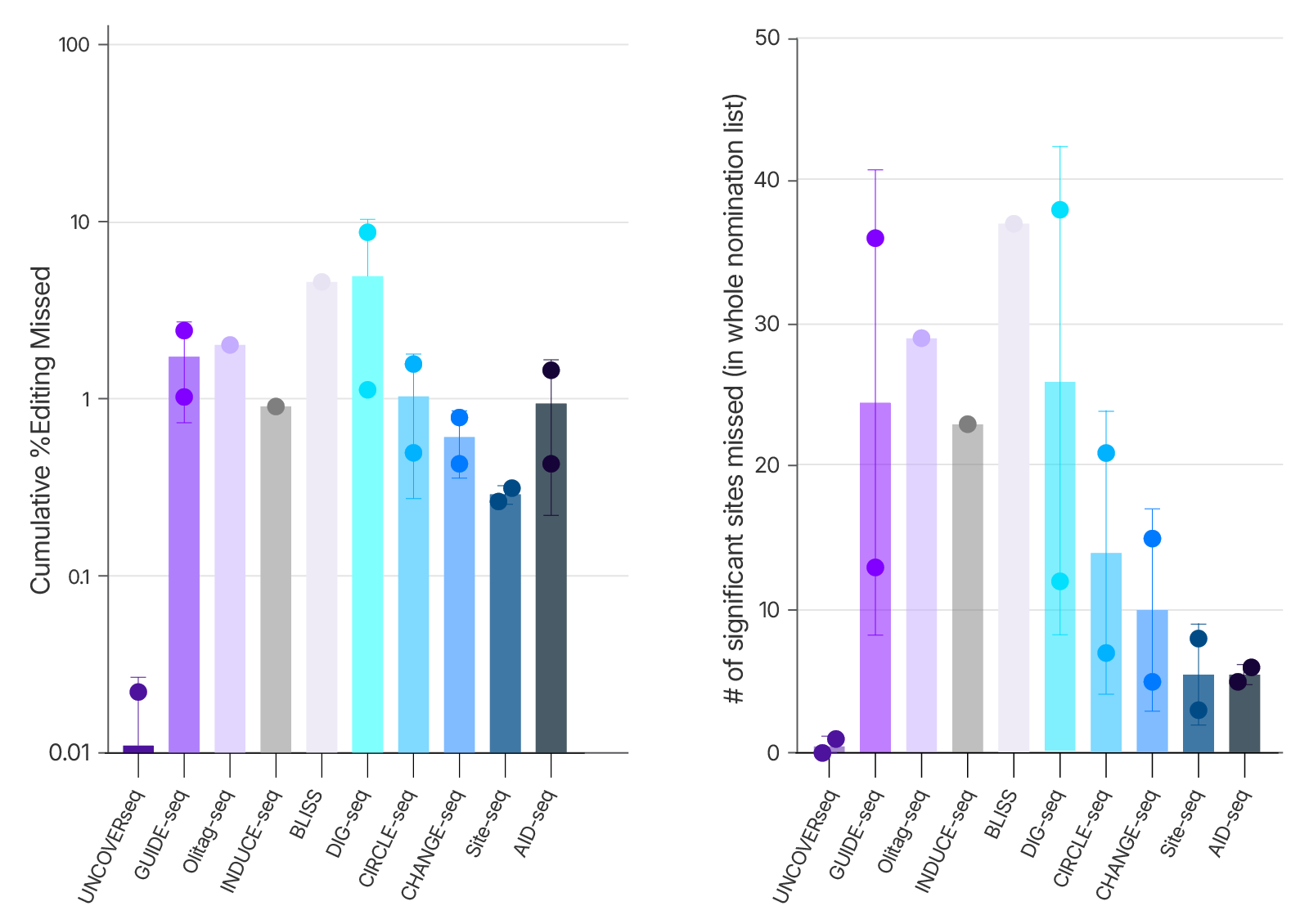
Figure 2: Quantification and comparison of off target events and sites missed by various methods. After confirmation, the cumulative frequency of significant off-target events not nominated per method for both gRNAs (n = 2) was quantified in addition to HΔ the total number of significant off-target sites missed.
Resources
Brochures & Flyers


Frequently asked questions
How many cells are required to do nomination?
While this is flexible, we generally recommend 2 million cells per sample. This is to ensure sufficient minimal gDNA inputs are obtained for downstream work.
FOR INFORMATIONAL PURPOSES ONLY. The data provided are for informational use only and should not be used as the sole basis for any critical decision making. The data generated are based on assay procedures that have not undergone full validation; formal design and development activities are ongoing.
- CRISPR genome editing
- FAQs
- Next generation sequencing
- Off-Target Analysis Service
- Product Info
- cas9 gRNA design
- crispr
- CRISPR genome editing
- CRISPR-Cas9
- gRNA
- guide RNA
- guide RNA (gRNA)
- NGS workflow
- rhAmp
Related products
cGMP25-3559_002
GUIDE-seq™ is owned by Maxcyte®, Inc.
FOR INFORMATIONAL PURPOSES ONLY. The results provided are for informational use only and should not be used as the sole basis for any critical decision making. The results provided herein are based on assay procedures which have not undergone full validation; formal design and development activities are on-going. Purchasers are responsible for all decisions regarding the use of this information.
Leave a comment